


Spaces between teeth may look like a simple cosmetic concern, but they do not all have the same cause or require the same treatment. A gap may be normal during dental development or related to tooth and arch size, a missing tooth, an oral habit, or periodontal disease.
Sound treatment therefore begins not with ‘How do we close the gap?’ but with ‘Why did it develop?’ Closing a space without treating its cause can create an attractive short-term result while increasing the chance that it will reopen.
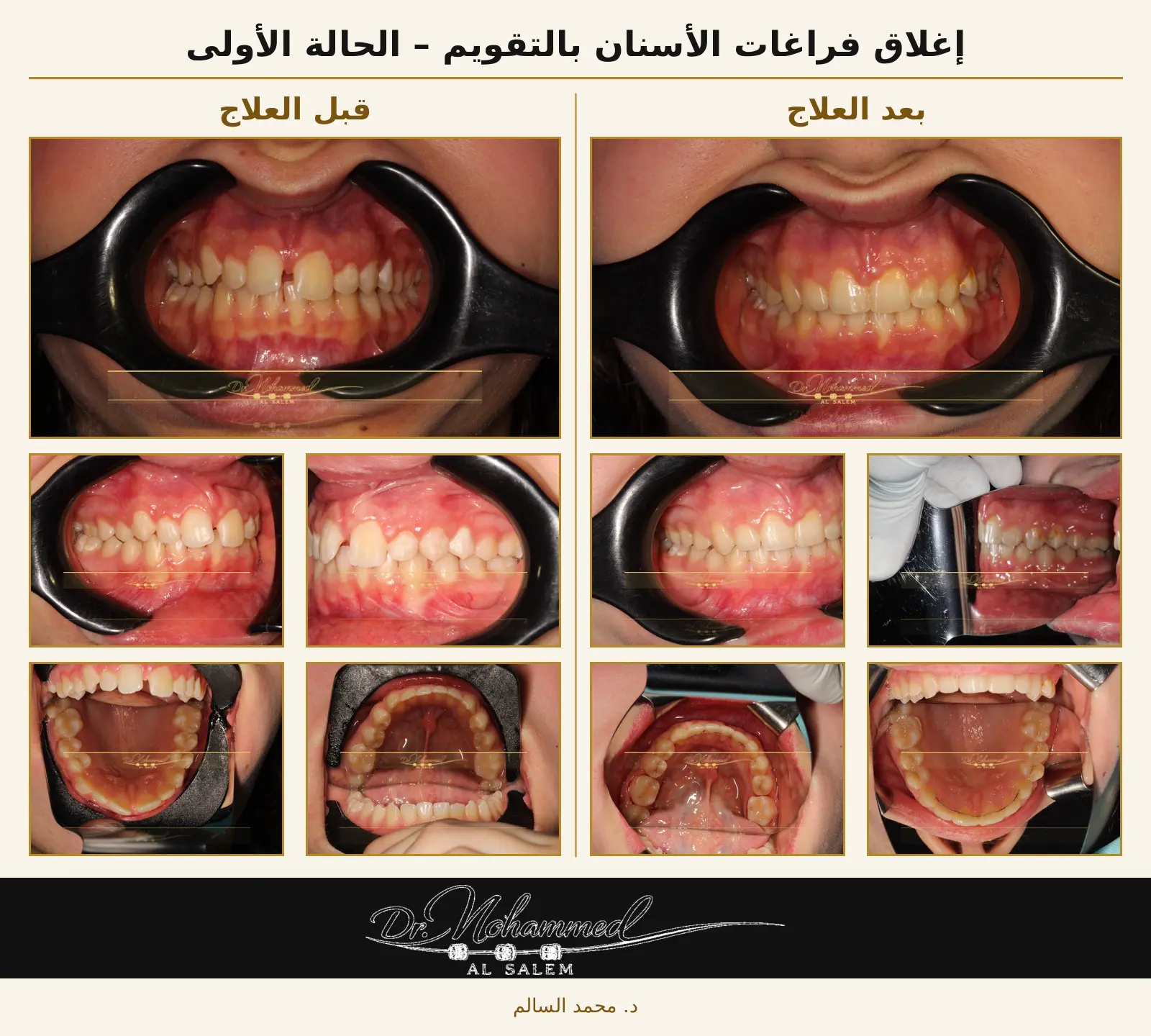
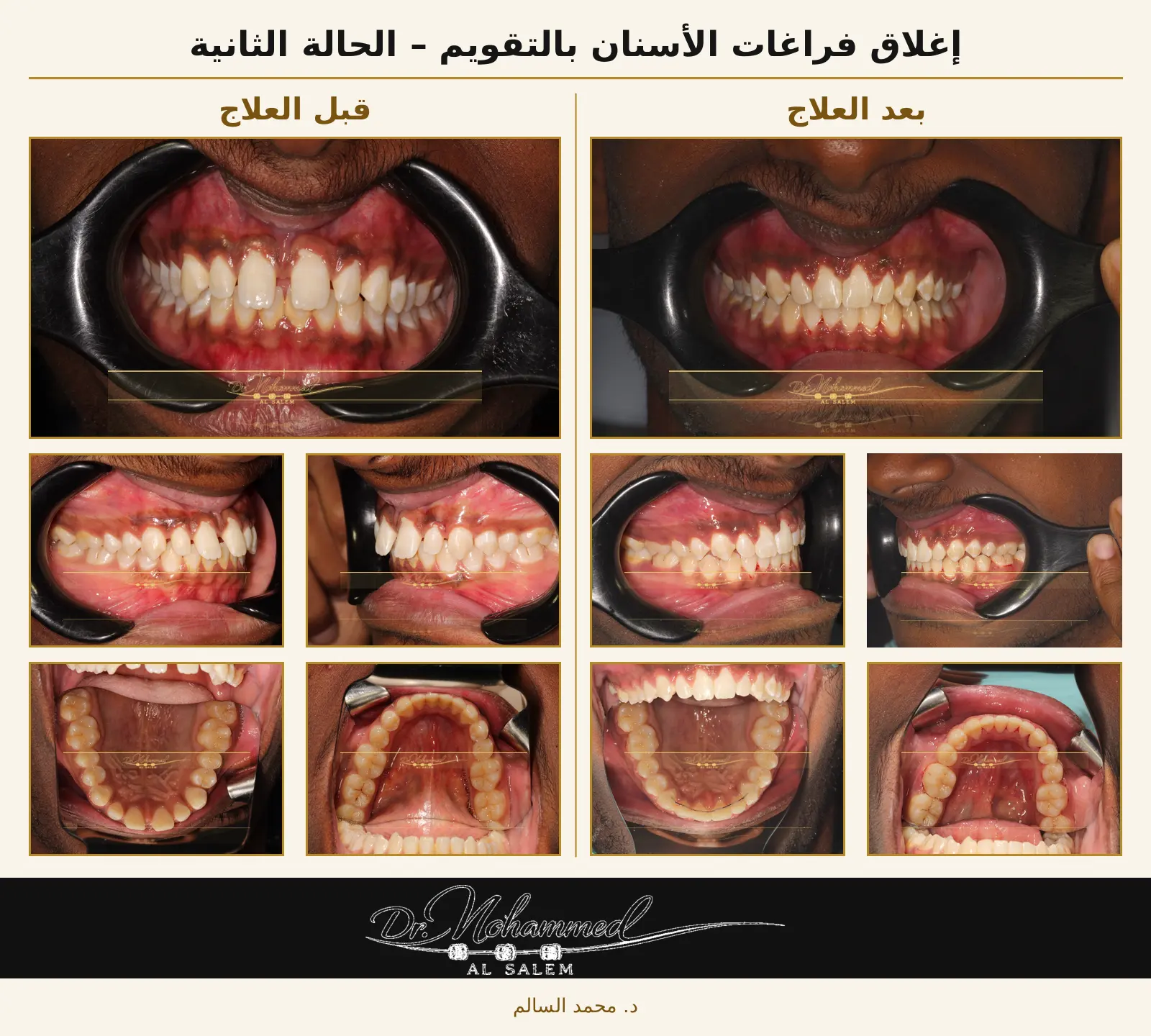
What are a diastema and generalized spacing?
A diastema is a visible space between adjacent teeth, most often the gap between the upper central incisors. Generalized spacing describes several spaces across one or both dental arches.
Some childhood spacing reduces naturally as permanent teeth—particularly the upper canines—erupt. A persistent gap after permanent tooth eruption deserves a detailed assessment before treatment.
What causes spaces between teeth?
Finding the cause is the key step, and more than one factor may be present.
- A tooth–arch size discrepancy or unusually small or shaped teeth.
- A congenitally missing tooth or an extra tooth blocking normal movement.
- An upper lip frenum that contributes to persistence in selected patients.
- Tongue thrust, thumb sucking, or another continuing oral habit.
- Proclined front teeth with spacing between them.
- Periodontal disease, loss of bone support, and pathological tooth migration.
- Missing teeth or long-term changes in how biting forces are distributed.
How is the cause diagnosed?
Assessment includes the dental and medical history, teeth, bite, gums, tongue, and lips. Clinical photographs, a digital scan, and appropriate radiographs may be needed to check tooth number, root position, and supporting bone.
The orthodontist then determines whether spacing is localized or generalized, whether the cause is dental, periodontal, or functional, and whether orthodontics alone is sufficient.
How can dental spacing be treated?
Many spaces can be closed with fixed braces or clear aligners. The goal is not simply to pull teeth together; it is to coordinate the arch, control roots, establish stable contacts, improve the bite, and distribute any remaining space precisely.
Small or disproportionate teeth may require conservative composite bonding or veneers after orthodontic space distribution. An extra tooth may require removal, while a missing tooth calls for a deliberate choice between orthodontic space closure and creating an ideal replacement site.
Periodontal disease and functional habits must be managed when they contribute. Frenectomy is not routine for every midline gap; it is considered only when clinically relevant and is timed with orthodontic treatment.
Why are spacing cases prone to relapse?
Bone and soft tissues need time to adapt after tooth movement. Tongue pressure, incisor inclination, tooth-size discrepancy, reduced periodontal support, and fibers between the teeth may all encourage a space to reopen.
Long-term studies report varying relapse rates. The figures do not predict an individual result, but they explain why retention is an essential part of treatment rather than an optional final step.
Retainers are part of the treatment result
After space closure, a thin fixed retainer behind the front teeth, a removable retainer, or both may be recommended. Long-term retention is often particularly important for a midline diastema and may continue for many years or indefinitely while the patient wishes to preserve the result.
- Follow the prescribed removable-retainer schedule.
- Check a fixed retainer and contact the clinic promptly if it feels loose.
- Clean carefully between the teeth and around the bonded wire.
- Continue dental and periodontal reviews and manage any recurring oral habit.
- Seek advice as soon as a space begins to reopen; early correction is usually simpler.
Can every gap be closed with orthodontics alone?
No. Some cases need only orthodontics, while others require restorative dentistry, periodontal care, removal of an extra tooth, replacement of a missing tooth, or functional therapy.
At Loft Clinics in Al Rawdah, Jeddah, Dr Mohammed Al Salem assesses the teeth, bite, periodontal health, and required records before planning treatment—and discusses retention from the outset because it is central to maintaining the result.
This article provides general education and is not a substitute for an in-person examination or diagnosis. Treatment method, duration, and retention requirements vary between patients.
Selected medical references
- Management of maxillary midline diastema with emphasis on etiology
- Postretention stability after orthodontic closure of maxillary interincisor diastemas
- Stability of maxillary interincisor diastema closure after orthodontic treatment
- Development of a clinical practice guideline for orthodontic retention
- Long-term bonded retention after closure of maxillary midline diastema