


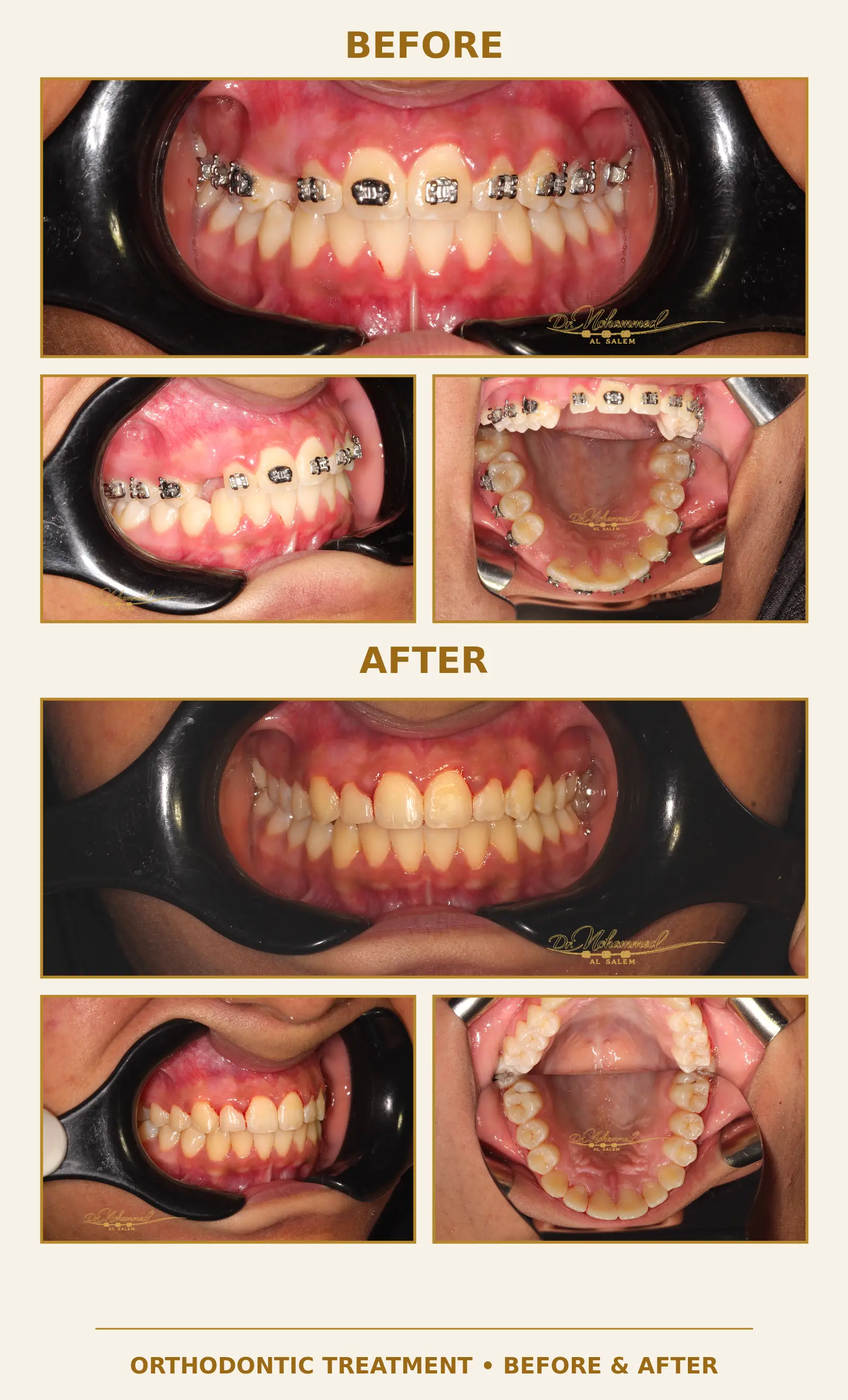
What is an impacted canine?
An impacted canine is a permanent canine that has not emerged into the mouth at the expected time and remains partly or completely within the bone or beneath the gum. Lack of space, an abnormal eruption path, or an obstruction may contribute.
A retained baby canine, eruption on one side but not the other, or an incidental finding on an X-ray may be the first sign. An impacted canine does not always cause pain.
How does imaging locate the canine?
Assessment begins with a clinical examination of the retained baby tooth, available space, gums, and bite. A panoramic X-ray and other suitable views help show the canine’s direction, depth, and proximity to neighbouring teeth.
Three-dimensional imaging may be recommended when the relationship to nearby roots is unclear or more precise planning is needed. It is not required for every patient and should be used when the additional information can influence care.
- Direction, angulation, and depth of impaction.
- Distance the canine may need to travel.
- Available space or the need to create it.
- Proximity to adjacent roots and possible effects on them.
- Bone, gum, and any associated finding visible on imaging.
When can the canine be exposed and guided orthodontically?
Orthodontic traction may be considered when the canine’s position allows gradual movement with controlled light force, sufficient space can be provided, and the expected risks to nearby roots and gums are acceptable.
The orthodontist may first create space. An oral surgeon can then expose part of the canine and attach a small traction device. After healing, the orthodontist applies carefully directed light forces to guide the tooth toward the dental arch while monitoring the surrounding tissues.
- Create adequate space before or during traction.
- Surgically expose the canine and attach a traction device when needed.
- Use light forces and adjust their direction in stages.
- Monitor adjacent roots, gums, bone, and tooth response.
When might extraction be recommended?
Extraction may be the safer option when the canine is in a severely unfavourable or very distant position, is fused to the bone and does not move, has significant damage, threatens neighbouring roots, or when the risks and burden of traction outweigh the likely benefit.
An impacted canine does not automatically require extraction, and the wish to preserve it does not guarantee that traction is feasible. Alternatives may include radiographic monitoring, extraction, orthodontic space closure, or tooth replacement, depending on age, bite, and oral health.
Is successful traction guaranteed?
No treatment outcome can be guaranteed before care begins. Response may be influenced by tooth position, age, root and bone health, ankylosis, appointment attendance, and oral care.
Examination and imaging allow a realistic discussion of feasibility, duration, and risk, but the plan may need to change if the canine does not move as expected or new information appears during follow-up.
Book an impacted canine assessment in Jeddah
If a canine is late to erupt or an X-ray shows impaction, an early assessment can clarify the options before additional problems develop. Book an orthodontic evaluation with Dr. Mohammed Al-Salem in Jeddah to review the examination and imaging and discuss the most appropriate options for your case.
What patients often ask
Can every impacted canine be guided with braces?
No. Many can be guided, but suitability depends on position, direction, distance, space, and the health of adjacent roots, bone, and gums.
Does every impacted canine need a 3D scan?
Not always. A panoramic X-ray is often the starting point. Three-dimensional imaging is requested when more precise information about nearby roots and tissues may affect the decision.
Is surgical exposure painful?
It is usually performed under local anaesthesia. Temporary discomfort or swelling may follow, depending on the canine’s position, the exposure technique, and aftercare.
How long does orthodontic traction take?
Timing varies considerably and cannot be predicted accurately from one photograph. It depends on position, distance, biological response, and the overall orthodontic plan.
What if an impacted canine is left untreated?
Some canines remain symptom-free and are monitored, while others may affect adjacent roots or cause other problems. Examination and imaging determine whether treatment or observation is appropriate.