


Accurate location
Appropriate imaging clarifies the tooth direction and its relationship to nearby roots.
A precise plan to locate the impacted tooth, protect adjacent teeth, and guide it into position when clinically feasible.
Orthodontic & Dentofacial Orthopedics Specialist
15+ years of experience · Jeddah
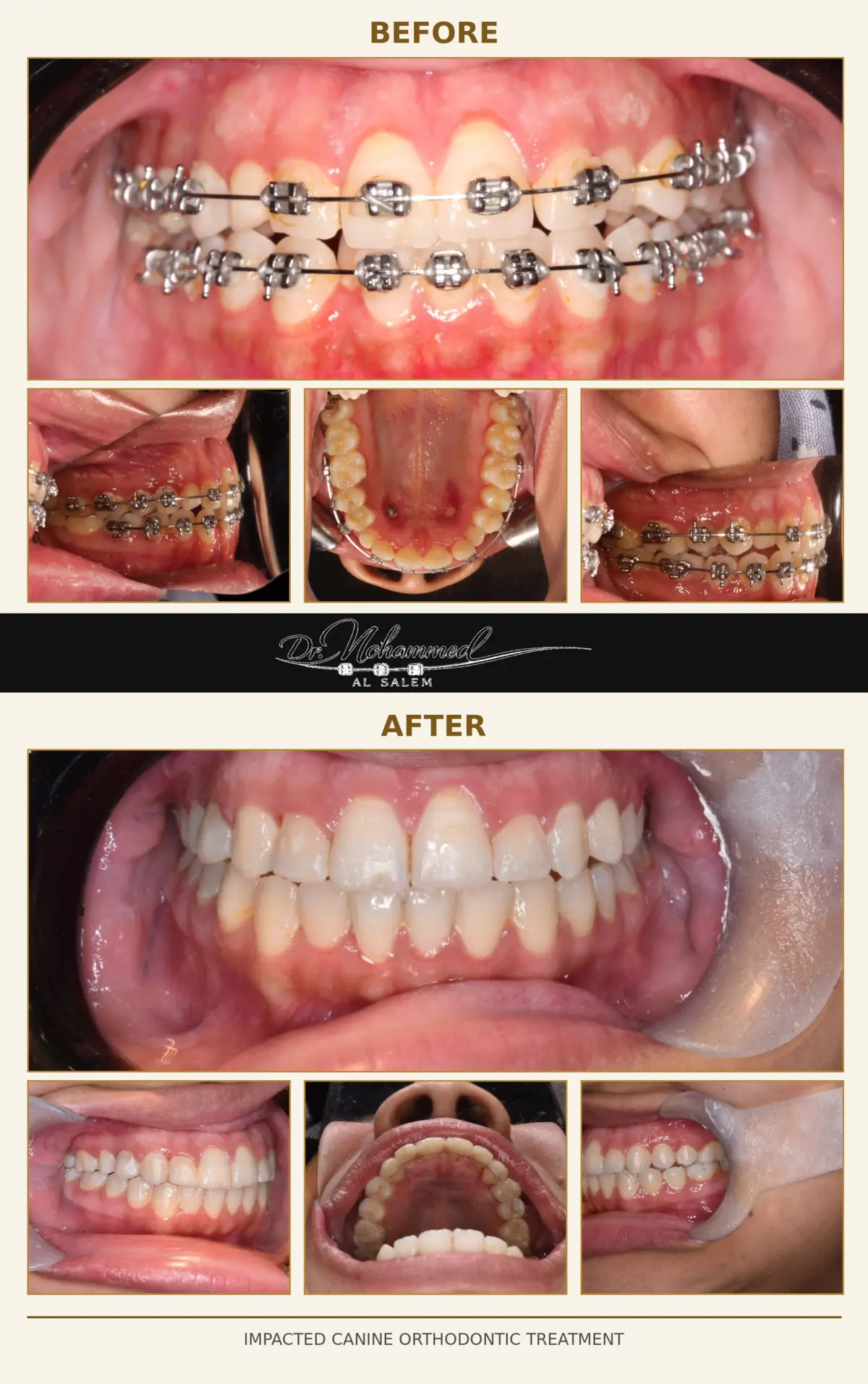
An impacted tooth has not emerged into the mouth at the expected time because it may be blocked by bone, gum, or another tooth. Upper canines are among the most commonly impacted permanent teeth after wisdom teeth.
Observation, surgical exposure with orthodontic traction, or another option is selected according to tooth position, available space, roots of adjacent teeth, and the patient’s age.
Clinical photographs taken during treatment and after completion. Results vary according to diagnosis and individual response.
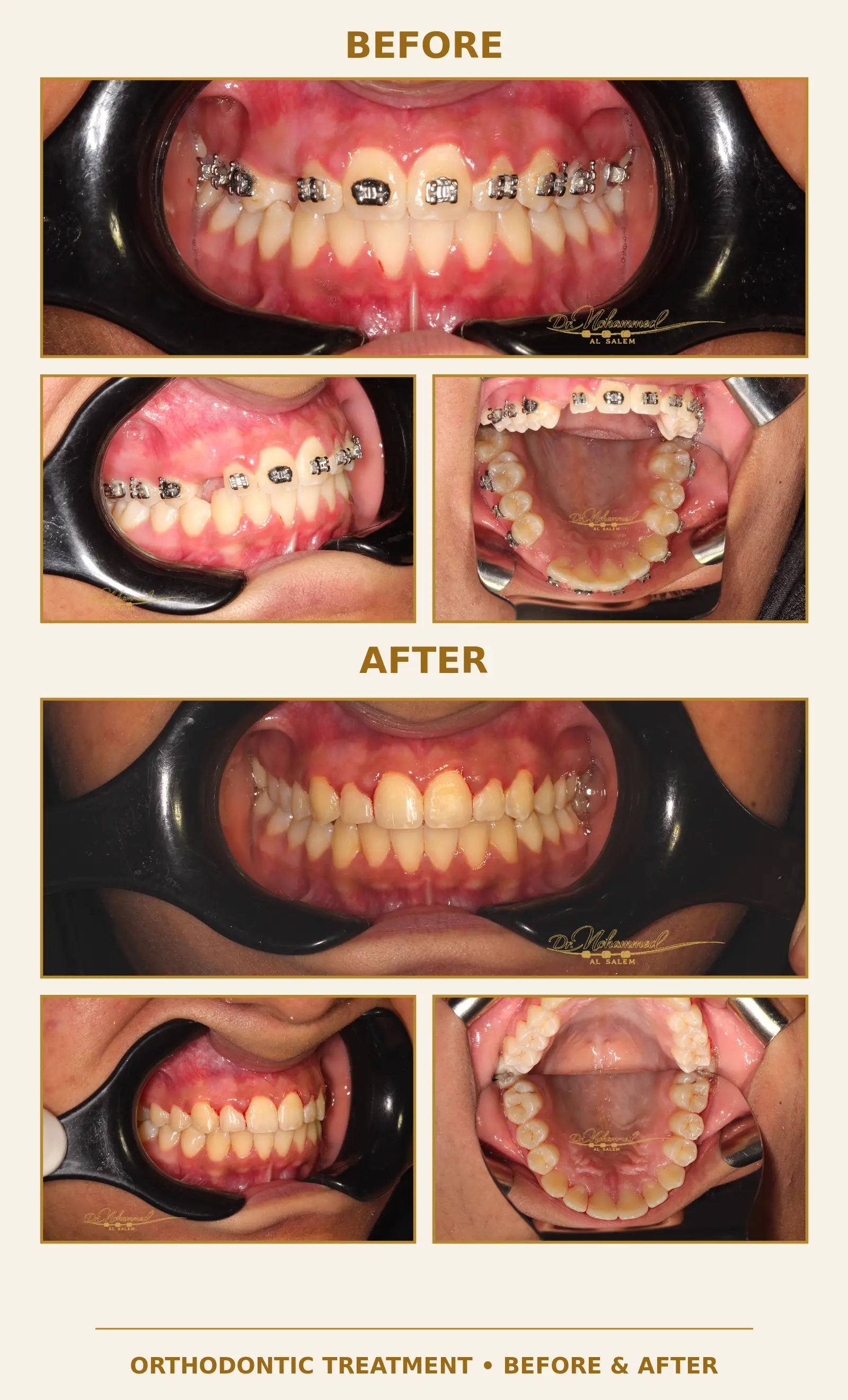
Appropriate imaging clarifies the tooth direction and its relationship to nearby roots.
Adequate space may be prepared before the impacted tooth is guided.
Treatment may involve collaboration between the orthodontist and oral surgeon.
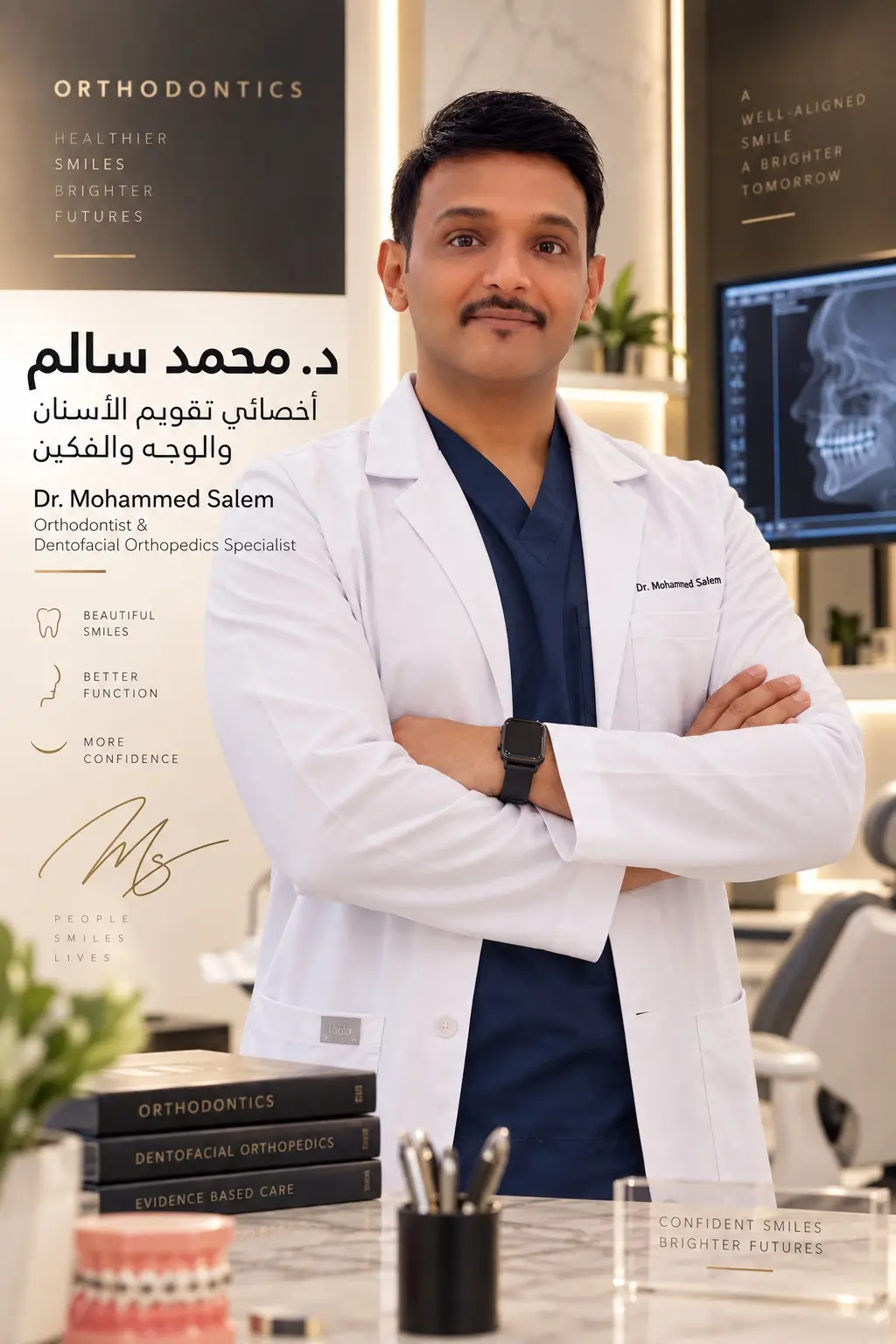
Dr. Mohammed Al-Salem combines more than 15 years of orthodontic experience with a careful assessment of the teeth, jaws, facial balance, and each patient’s individual goals.
Book your consultationGeneral educational answers. A direct clinical assessment remains essential for choosing the right appliance and treatment duration.
Often it can, but the decision depends on its position, direction, travel distance, and the health of adjacent roots.
A minor surgical exposure may be needed to attach an orthodontic traction device. This is decided after examination and imaging.
Timing varies considerably with position, space, and biological response, so it cannot be predicted accurately before diagnosis.