


Self-ligating brackets
A built-in mechanism retains the wire instead of elastic ties around each bracket.
A self-ligating bracket system that holds the archwire with a built-in mechanism. Its value comes from appropriate selection within a complete diagnosis and plan.
Orthodontic & Dentofacial Orthopedics Specialist
15+ years of experience · Jeddah
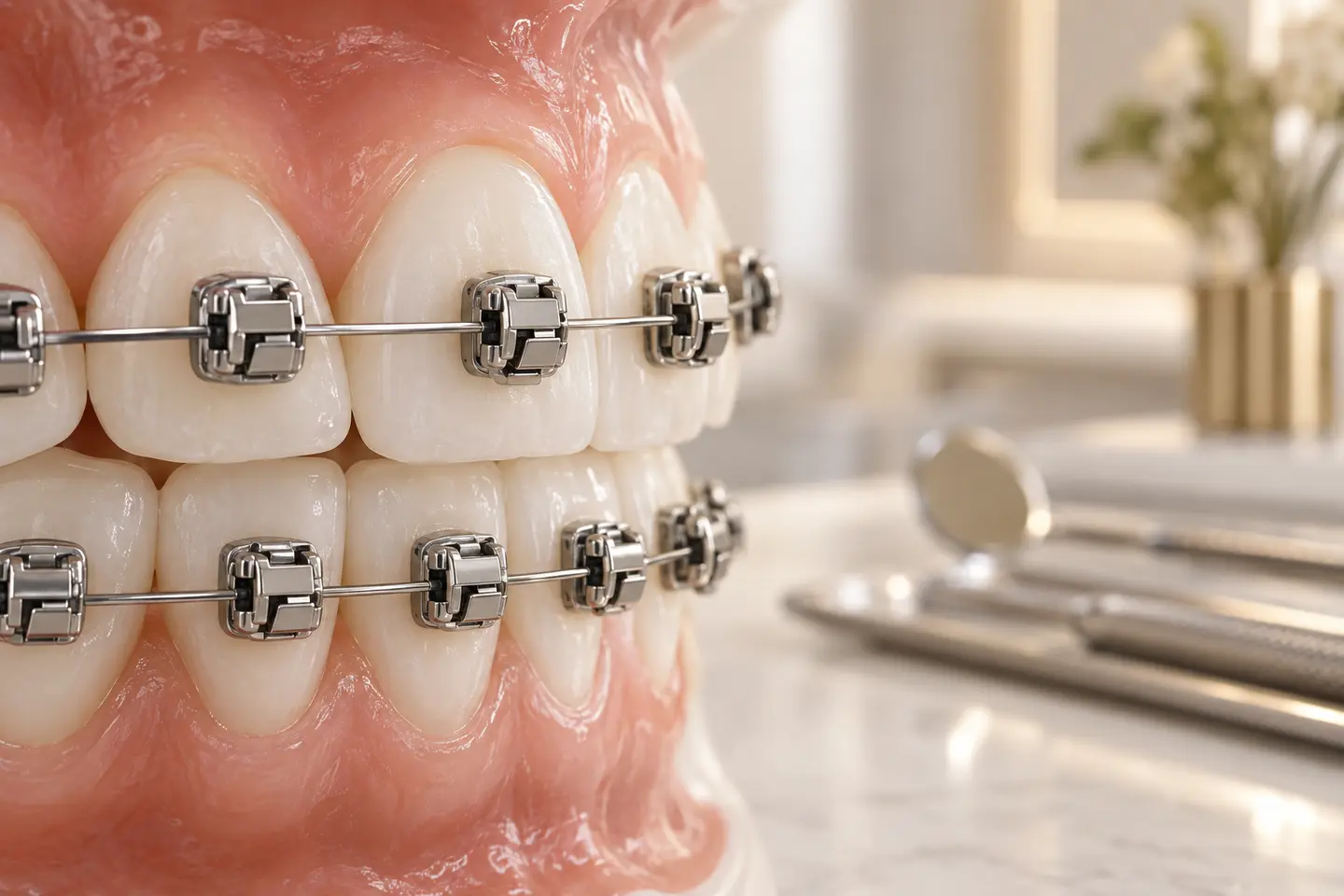
Conventional braces commonly use elastic or metal ties to secure the wire, while Damon brackets have a built-in opening and closing mechanism. This places them within the category of self-ligating braces.
The mechanics and appointments may differ, but the system should not be viewed as an automatic promise of faster treatment or treatment without extraction. Core decisions depend on diagnosis, safe movement limits, facial balance, and bite goals.
These are features of the appliance’s design and use. Treatment time, comfort, extractions and jaw expansion depend on diagnosis and planning; Damon alone does not guarantee shorter, painless or extraction-free treatment.
A built-in mechanism retains the wire instead of elastic ties around each bracket.
Diagnosis, wire selection, force levels, and treatment sequence matter more than a brand name alone.
No single bracket can guarantee shorter treatment or eliminate extractions in every case.

Dr. Mohammed Al-Salem combines more than 15 years of orthodontic experience with a careful assessment of the teeth, jaws, facial balance, and each patient’s individual goals.
Book your consultationGeneral educational answers. A direct clinical assessment remains essential for choosing the right appliance and treatment duration.
Damon is a self-ligating orthodontic system. Each bracket has a built-in mechanism that holds the wire instead of an elastic tie around every bracket.
It means the bracket itself has a gate or clip that retains the wire. It describes how the wire is engaged and does not guarantee a specific result or treatment time.
That cannot be guaranteed. Total treatment time depends mainly on the case, required movements, biological response, and cooperation—not on the bracket system alone.
No bracket system alone decides whether extractions are required. That decision depends on crowding, tooth protrusion, bone limits, facial profile, and treatment goals.
The experience varies between patients and treatment stages. Temporary pressure or discomfort can occur with any orthodontic appliance.
Clean around the brackets and beneath the wire, use appropriate interdental aids, and avoid foods that could damage the appliance.