


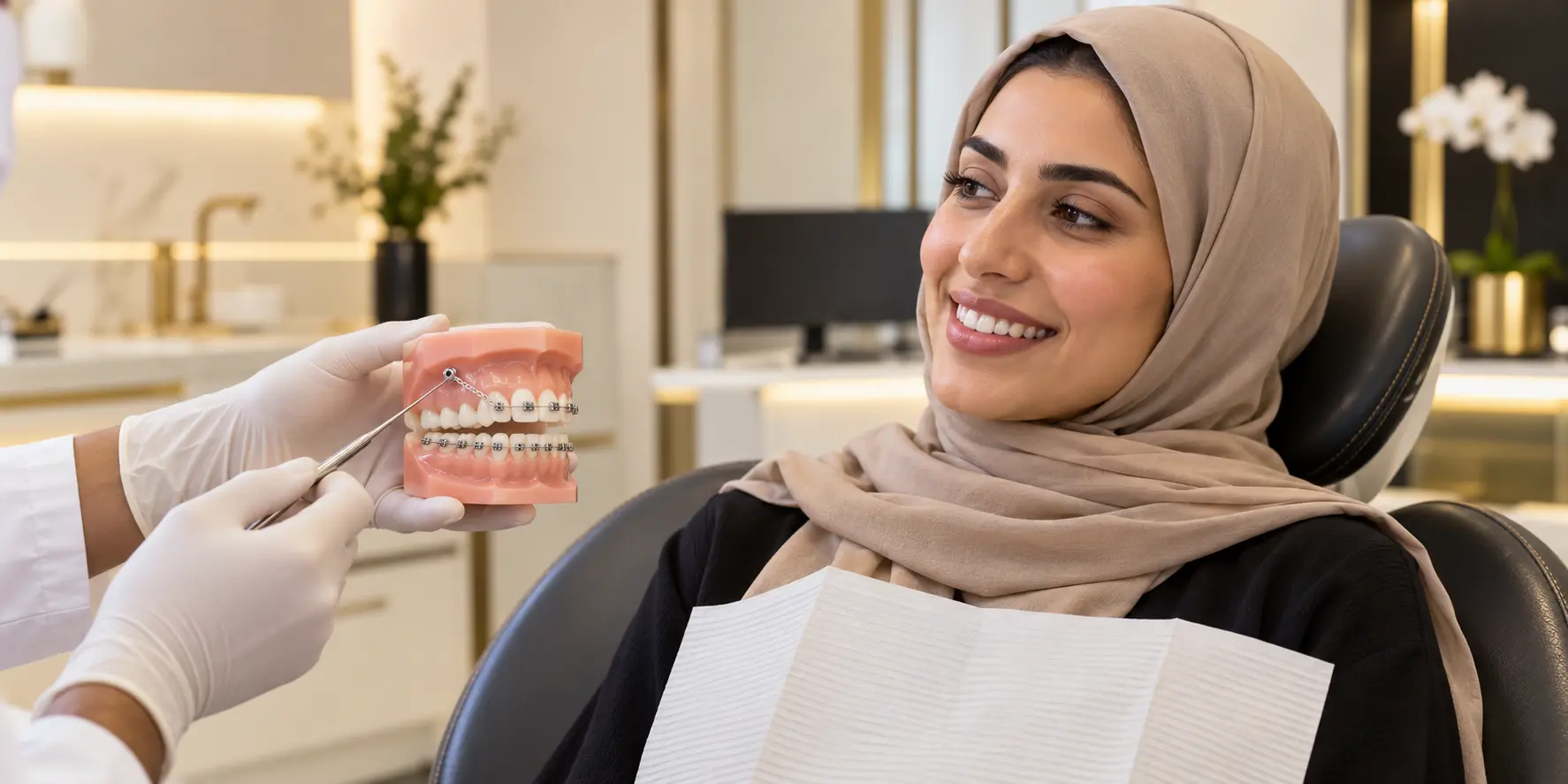
What is a TAD, and why might an orthodontist need one?
When one tooth is used to move another, the anchoring teeth may also move in an unwanted direction. A TAD provides an anchorage point that is relatively independent of the teeth, allowing force to be directed to the target tooth or group while reducing unwanted reciprocal movement.
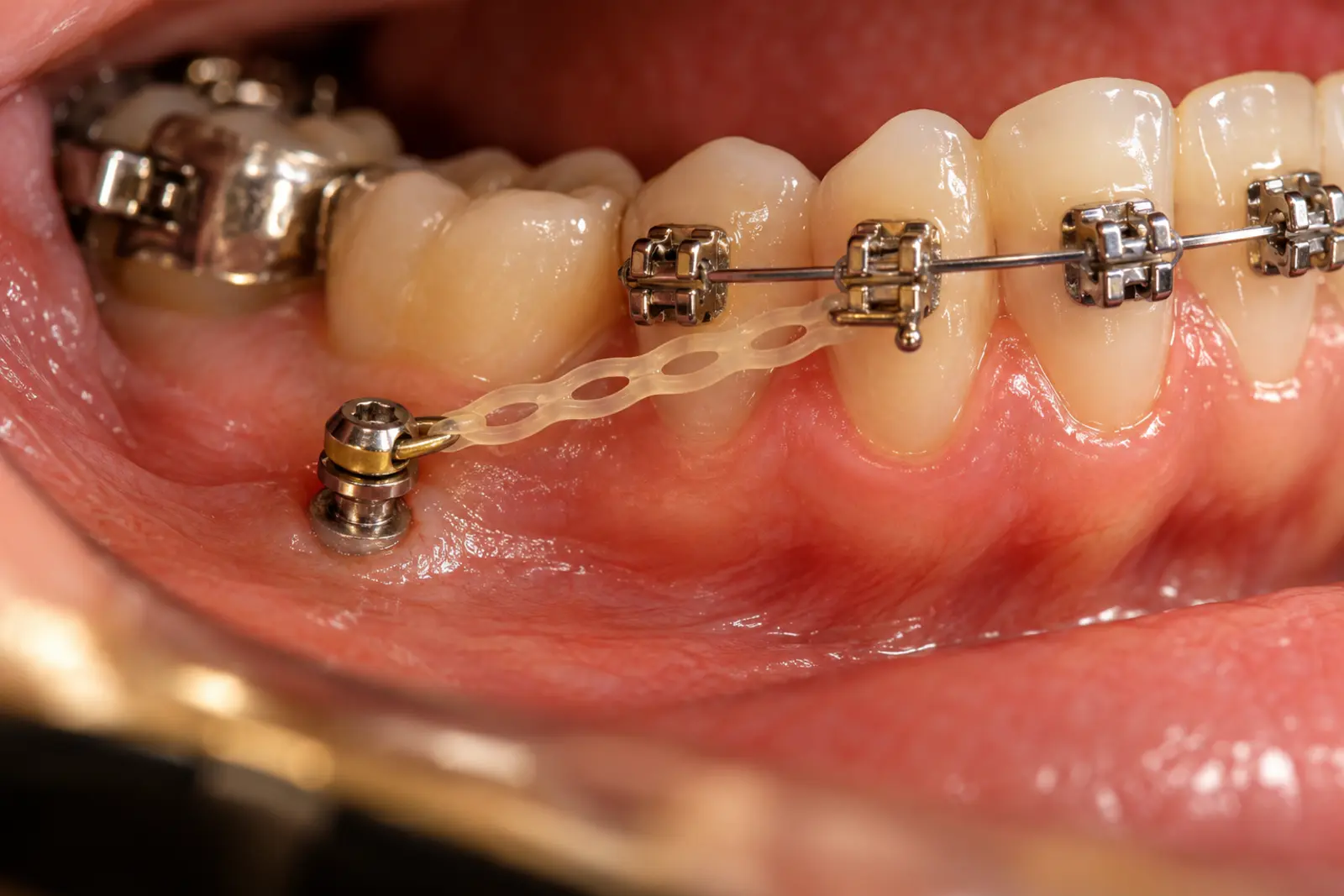
Most mini-screws are made from titanium alloy. A small head remains visible in the mouth so an elastic, spring, or orthodontic chain can be attached. The device is temporary and is usually removed when it is no longer needed; it is not a permanent dental implant used to replace a missing tooth.
- More precise control of force direction and magnitude.
- Less dependence on patient cooperation with some external appliances.
- Access to movements that may be difficult using dental anchorage alone.
- In selected cases, it may reduce the need for more complex measures, but it does not replace extraction or surgery when those are necessary.
Do all orthodontic cases need mini-screws?
No. Most orthodontic cases can be treated without a TAD. It is considered when dental anchorage is insufficient or when a specific movement is needed while protecting other teeth from unwanted movement.
The decision considers the malocclusion, bone thickness, roots, nerves and sinuses, gum health, oral hygiene, age, smoking, and general health. Another option may be chosen if a suitable safe site is unavailable.
Common situations in which a TAD may help
These are examples, not automatic indications. Suitability depends on the diagnosis and the biomechanics required.
- Retracting front teeth while preserving posterior anchorage after extraction or space creation.
- Intruding molars or controlling vertical movement in selected open-bite or excessive-gum-display cases.
- Moving molars backward or forward without unwanted anchorage loss.
- Correcting an asymmetric movement on one side.
- Uprighting a molar or assisting traction of an impacted tooth.
- Closing spaces or creating room for a missing tooth according to the plan.
- Supporting bone-borne expansion appliances such as MARPE in selected cases.
How is an orthodontic mini-screw placed?
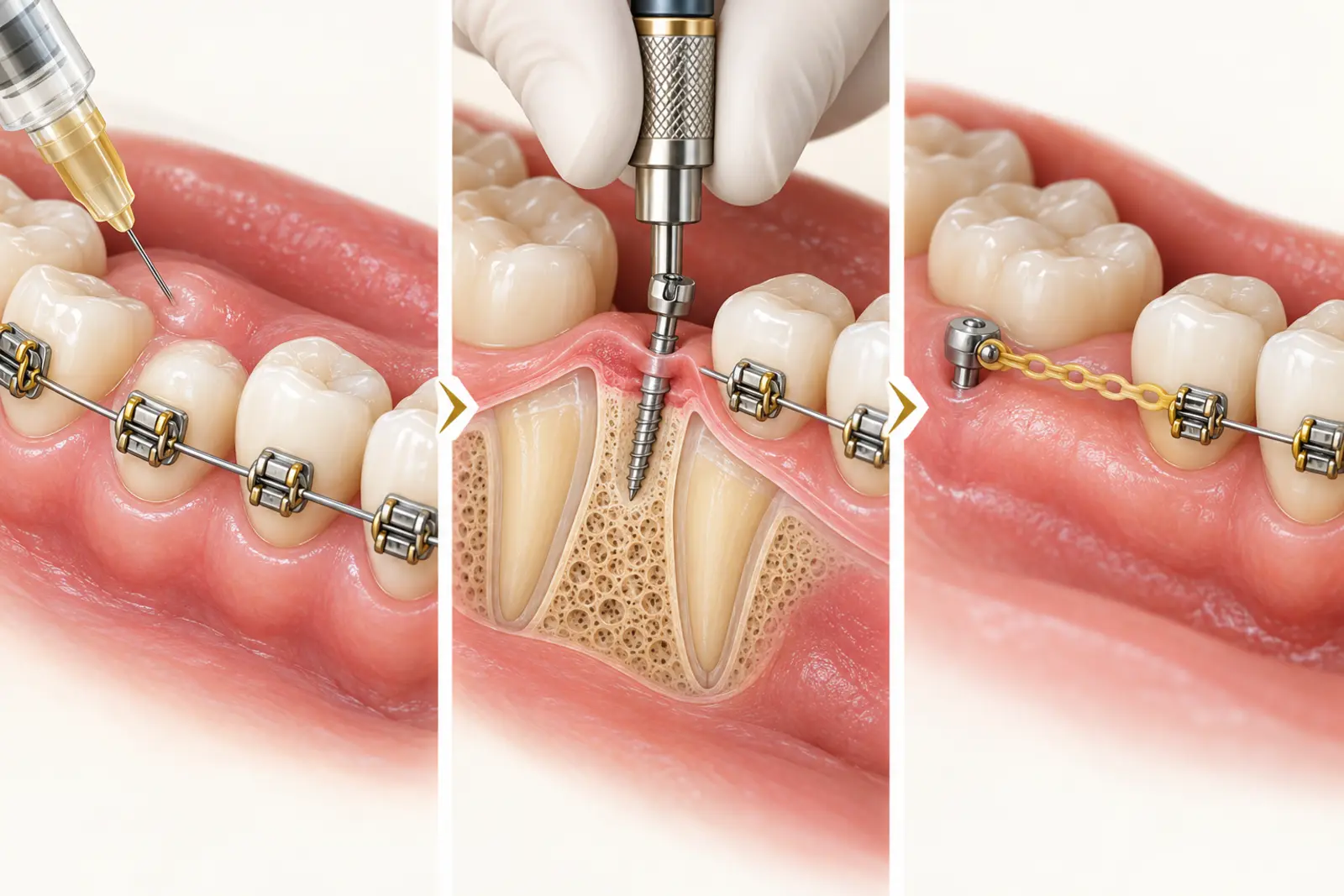
The site is selected after assessing the gums, bone, roots, and suitable radiographs. Three-dimensional imaging may be useful when the anatomy is unclear or the extra information can change the plan. The screw may be placed between roots, in the palate, or behind teeth depending on the goal.
After cleaning and local anaesthesia, the TAD is inserted through the gum into bone with a dedicated driver. Many sites need no large incision or stitches, although limited bone preparation may be used depending on the device and bone density. Orthodontic force may be connected immediately or later according to the plan.
Removal is usually a short procedure once anchorage is no longer needed. A simple procedure still requires careful site selection to avoid roots and other anatomical structures.
Does placement hurt?
Local anaesthetic is used, so most patients report pressure or movement rather than sharp pain during placement. Mild soreness or tenderness may occur for several hours or a few days after the anaesthetic wears off, and experiences vary.
Severe or increasing pain, persistent swelling, discharge, fever, ulceration from rubbing, or a loose screw should be reported. The clinician selects a suitable pain reliever according to medical history; do not start antibiotics or medicated rinses without advice.
How should I clean around the TAD?
Plaque around the head and gum can inflame the soft tissues and may increase the risk of loss of stability. Keep the area clean without pressing or moving the screw.
Use a soft toothbrush gently around the head twice daily and clean the attached chain or elastic as demonstrated. A small interdental brush or a short course of mouth rinse may be recommended; use it only as directed.
- Wash your hands and do not play with the TAD using your tongue or fingers.
- Do not use sharp objects or try to tighten it yourself.
- Avoid hard foods that strike the head and clean after meals when possible.
- Report persistent bleeding, redness, swelling, odour, discharge, or movement.
- Attend reviews, because an early problem may not be painful.
Can a mini-screw loosen or fall out?
Successful use depends substantially on the orthodontist’s experience and skill in selecting a safe, appropriate site and placing the screw with suitable direction and stability. It also depends on the patient’s cooperation with continuous cleaning, instructions, and review visits.
Yes. Some TADs lose stability despite planning and care. Possible factors include bone quality and thickness, site and root proximity, applied force, soft-tissue inflammation, smoking, and repeated trauma. Failure does not always mean that either the patient or clinician did something wrong.
If it becomes mobile, do not use or tighten it. The orthodontist will stop loading it, assess the cause, and decide whether to remove it, relocate it, or use another form of anchorage. Its stability through the entire treatment cannot be guaranteed in advance.
Book a TAD assessment in Jeddah
If your plan may benefit from additional anchorage, the orthodontist should explain why a TAD is proposed, reasonable alternatives, the expected site, care, and risks. Book an assessment with Dr. Mohammed Al-Salem in Jeddah to discuss whether a mini-screw is useful for your case. The decision is individual and cannot be made from one photograph or general information alone.
What patients often ask
Is a TAD the same as a dental implant?
No. A TAD is temporary orthodontic anchorage and is removed after use; a dental implant is designed to replace a missing tooth.
How long does it stay in the mouth?
It remains for the treatment phase that needs anchorage, sometimes for months or longer. It is removed when no longer needed or if it loses stability.
Is surgery required?
Placement is often a limited procedure under local anaesthesia, but the exact method depends on the site and bone and may require additional preparation.
Can I eat after placement?
Soft food is usually possible after numbness resolves. Avoid hard impact around the site and follow the clinician’s instructions.
Can it damage tooth roots?
The site is planned with examination and imaging to reduce this risk. Root contact is a possible complication, which is why planning and follow-up matter.
Does a loose TAD mean orthodontic treatment has failed?
Not necessarily. The mechanics can be changed, the screw may be relocated, or another anchorage option can be used after assessment.
Should I use chlorhexidine every day?
Do not use it long-term on your own. It may be prescribed for a limited period at an appropriate concentration when needed.